
Day of the Dead Flowers in Oaxaca: Meaning and Fun Facts
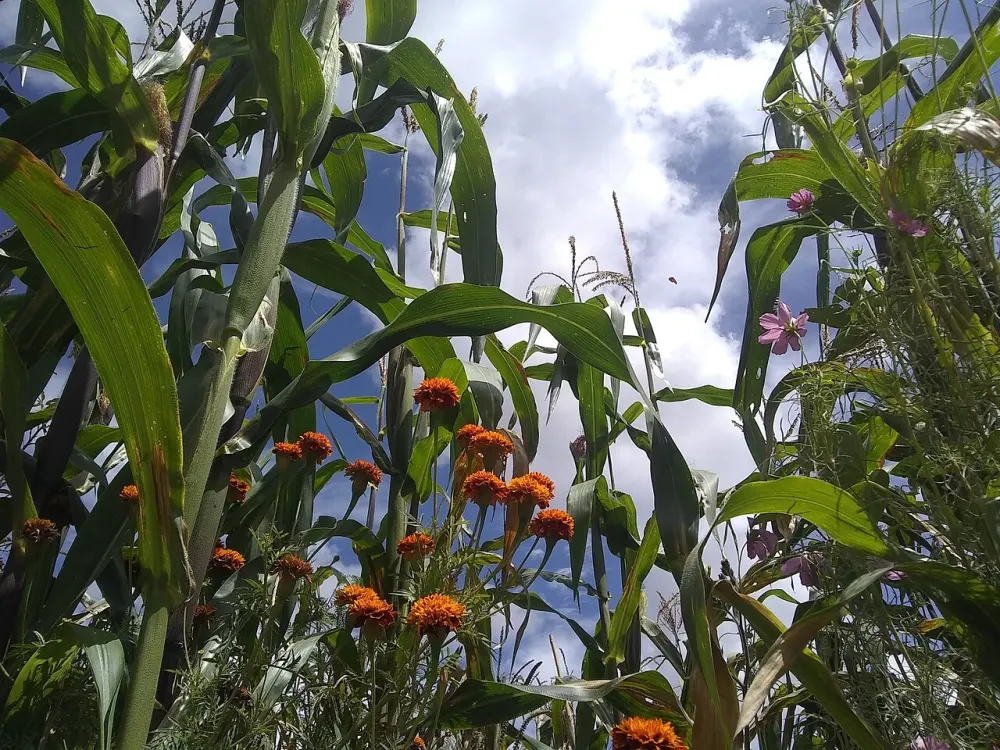
Photo from the site's archive: marigolds in a field; it does not depict a field included in the tour.
In an offering, flowers do much more than add color: they accompany the memory of a person. The cempasúchil usually catches the eye first, but the velvety purple textures and small white bouquets also tell stories. This guide will help you recognize them during your trip to Oaxaca and view the altars with greater context and respect.
1. Cempasúchil: The Way Back

© Joydeep · CC BY-SA 3.0 · WebP
The yellow and orange hues of the cempasúchil are among the most recognizable images of the Day of the Dead. According to tradition, the petals laid out along paths help guide the souls to the offering. That’s why it’s also worth looking at the ground: the path of petals is part of the altar’s meaning—it’s not just a decoration.
Its name comes from the Nahuatl language and is usually explained as “twenty flowers.” A botanical curiosity: what looks like a single flower is actually an inflorescence, a cluster of small flowers. The name does not mean that you will find exactly twenty petals on each flower head.
To see this in Oaxaca, take a look at how it’s combined with candles, food, and photographs. Before entering a field to take photos, ask the person in charge about access and permitted areas; do not pick flowers or walk on the furrows.
2. Velvet: a texture that also brings back memories

© Alphama · CC BY-SA 4.0 · WebP
The velvet flower is also known as "rooster's comb" or "lion's paw." Its velvety surface makes it easy to recognize without touching it. It comes in a variety of colors: not all velvet flowers are purple.
In some interpretations of the offering, it is associated with mourning and consolation. That interpretation doesn’t mean it has to have the same meaning in every home. If a family invites you to see their altar, asking why they chose that particular flower may reveal a story more interesting than any list of symbols.
3. Cloud: the small white tufts

© Avenue · CC BY-SA 3.0 · WebP
The cloud, also known as a bridal veil, appears in arrangements of many small flowers. The Ministry of Agriculture describes its use specifically on altars dedicated to deceased children. This association is a common reference, not an exclusive rule regarding who may receive white flowers.
When you look at an offering, consider the relationship between its elements: a toy, a photograph, or a food item can convey the meaning of the offering better than the color of a bouquet alone. Don't try to figure out a person's story based solely on the flowers you see.
4. "Amor seco": a name to ask about at the market

© Photo by David J. Stang · CC BY-SA 4.0 · WebP
The Fulgórica publication that inspired this guide includes the concept of “dry love” and offers a regional interpretation of its purple color, linking it to absence and memory. It is important to preserve this regional nuance: we do not present it as a belief shared by all of Oaxaca.
The UNAM fact sheet on Gomphrena globosa lists common names such as “amor seco,” “siempreviva,” and “inmortal.” Common names may vary; if you’re looking for a specific flower, bring a photo and ask the seller what they call it. It’s a good way to learn local vocabulary without confusing species based on a single name.
5. Gladiolas, carnations, and someone's favorite flowers

© ShohagS · CC BY-SA 4.0 · WebP

© Takkk · CC BY-SA 3.0 · WebP

© Joydeep · CC BY-SA 3.0 · WebP
Not all offerings are made with the same types of flowers. The materials provided by the Ministry of Agriculture also list flowers such as carnations and chrysanthemums among those used during this season. The reference publication also includes gladiolas and offers its own symbolic interpretation.
When paying your respects, the most helpful question is a simple one: “Why did they choose these flowers?” A bouquet may reflect a family tradition, what was available, or what the person being remembered liked. Avoid turning a personal preference into a universal explanation.
Three interesting facts that will help you see the offerings in a new light
The indigenous festival dedicated to the dead has been inscribed on UNESCO’s Representative List of the Intangible Cultural Heritage of Humanity since 2008. This recognition refers to a living tradition of the communities, not merely to the aesthetics of an altar.
The flowers do not stand alone: UNESCO describes paths lined with petals, candles, and offerings. The INAH explains that water, food, portraits, and copal are all part of the welcome and remembrance. Looking at the whole scene helps us understand why moving an item for a photo can alter something important to the family.
A single season brings together a variety of celebrations. Seeing an altar, attending a parade, and visiting a cemetery are all different experiences; you shouldn't expect the same music, atmosphere, or permission to take photos at every location.
How to Enjoy the Flowers and Traditions in Oaxaca
Start by taking a stroll through the markets and ask about the origin and names of the bouquets. You can enhance your visit with our guide to Oaxaca’s markets. We can’t guarantee flower availability or prices: they depend on the vendor, the harvest, and the day of purchase.
At a cemetery, ask for permission before taking photos of people or approaching an offering. Keep the paths clear, avoid using a flash if it disturbs others, and follow the instructions of families and organizers. An accompanied visit also requires this same consideration.
If you'd like to add a tour to your itinerary, check out Oaxatours' Day of the Dead tours. The October 31 tour includes a visit to a field of flowers and cemeteries; the November 1 tour focuses on the traditions of the Etla Valley. Review the current itinerary to confirm the route, schedule, availability, and what each tour includes.
See also our guide to Oaxaca's markets →
Frequently Asked Questions
What flowers are used in Day of the Dead offerings?
Among the best-known are marigolds, velvet flowers, and cloud flowers. Other flowers may also be used, depending on the community, availability, and each family’s memories.
Do all flowers have the same meaning in Oaxaca?
No. There are common associations, but the meaning depends on the context. It is best to ask those who prepared the offering rather than assume a single explanation.
Can I visit a cempasúchil field on my own?
It depends on the owner or the person in charge of the site. Check whether visitors are allowed, the entry requirements, and whether photography is permitted; a farm field is not automatically a public space.
Which tour should I choose to see the flowers and the cemeteries?
Check the October 31 departure on the Oaxatours Day of the Dead page. Availability, the route, and admission details are confirmed upon booking.
Sources and Reading Materials
Article written on October 29, 2026. Customs vary among families and communities.
Editorial inspiration: Fulgórica's post about the flowers in the offering. Original text by Oaxatours, expanded with the following sources; we do not reproduce the photos from the carousel.
- Fulgórica · publicación que inspiró el tema
- Secretaría de Agricultura · flores para el altar
- INAH · cempasúchil y memoria
- INECOL · curiosidades botánicas del cempasúchil
- UNAM · Gomphrena globosa
- UNESCO · Indigenous festivity dedicated to the dead
- INAH · ofrendas para los muertos
- Secretaría de Agricultura · floricultura de Día de Muertos
Tours to complement your visit
Learn about the traditions in context and choose the tour that best fits your trip.
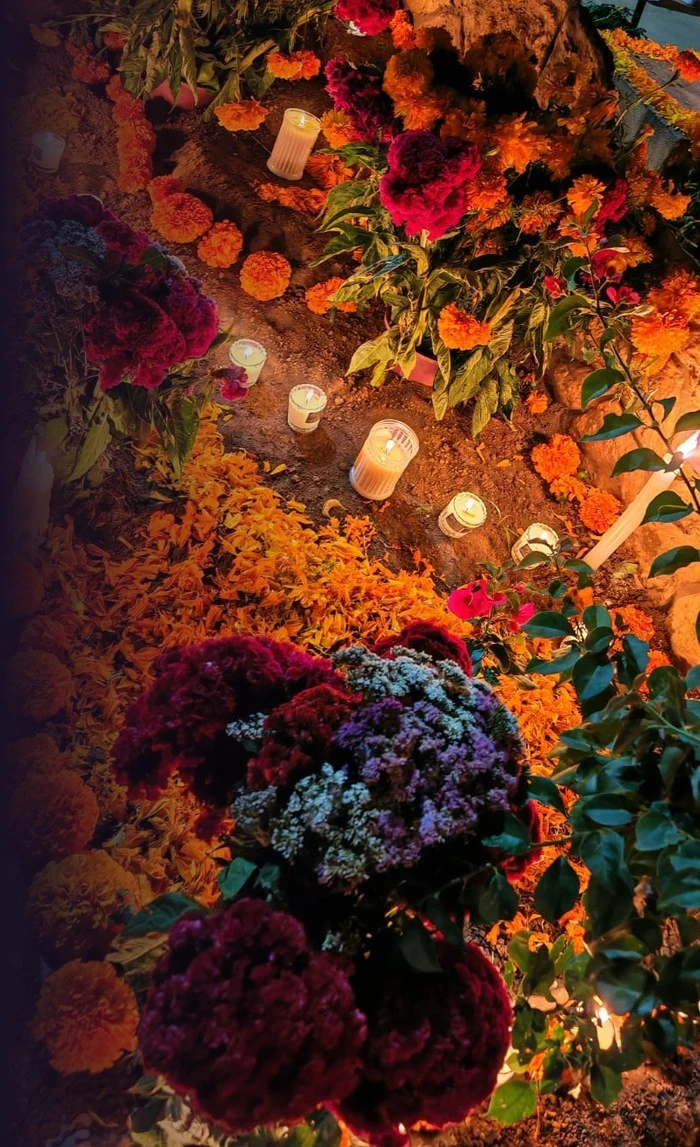
Day of the Dead Specials
Check the departures for October 31 and November 1 and 2, their routes, and availability.
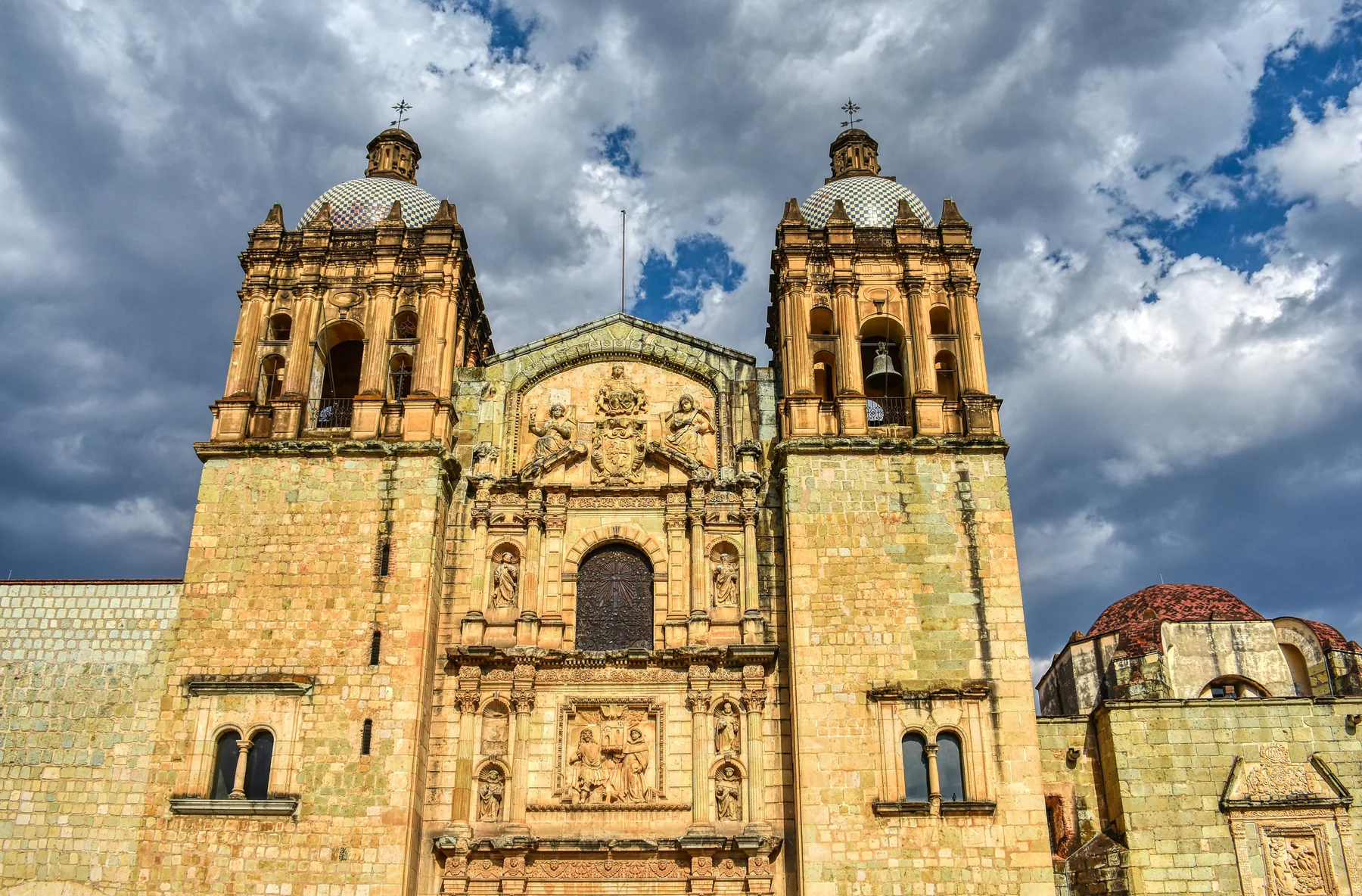
Historic District: Churches and Squares
Round out your visit with a stroll through the temples, plazas, and markets in downtown Oaxaca.